
A Beginner’s Guide to Metaverse Avatar Development
- LBM Solution

- Aug 6, 2025
- 5 min read

As the digital world shifts from web pages to immersive virtual environments, the concept of self-expression is also evolving. In the metaverse, where interaction happens in real time within 3D spaces, your identity is represented by an avatar. This makes metaverse avatar development a cornerstone of any virtual experience.
Whether you're a game developer, a 3D artist, a brand looking to enter virtual worlds, or simply a curious enthusiast, understanding how avatars are built and customized can open the door to rich, engaging digital identities.
This beginner-friendly guide explores everything you need to know—from basic concepts to tools and best practices—for creating lifelike and interactive avatars in the metaverse.
What is a Metaverse Avatar?
In the simplest terms, a metaverse avatar is your digital alter ego. It's a customizable 3D model that represents a user in virtual environments. These avatars can range from realistic human-like characters to stylized or even fantastical figures, depending on the nature of the platform or application.
Unlike traditional video game characters, metaverse avatars are not just visual representations—they often carry personal identity, social functions, and even programmable behaviors. This makes metaverse avatar development not just a design task, but a multi-disciplinary craft combining art, animation, technology, and user experience.
Why Avatars Matter in the Metaverse
In platforms like Decentraland, Horizon Worlds, or Roblox, avatars act as your social and interactive medium. They’re used in business meetings, concerts, educational simulations, and games. The success of these virtual interactions heavily relies on how well avatars can communicate personality, emotion, and intent.
Here’s why avatar development is critical:
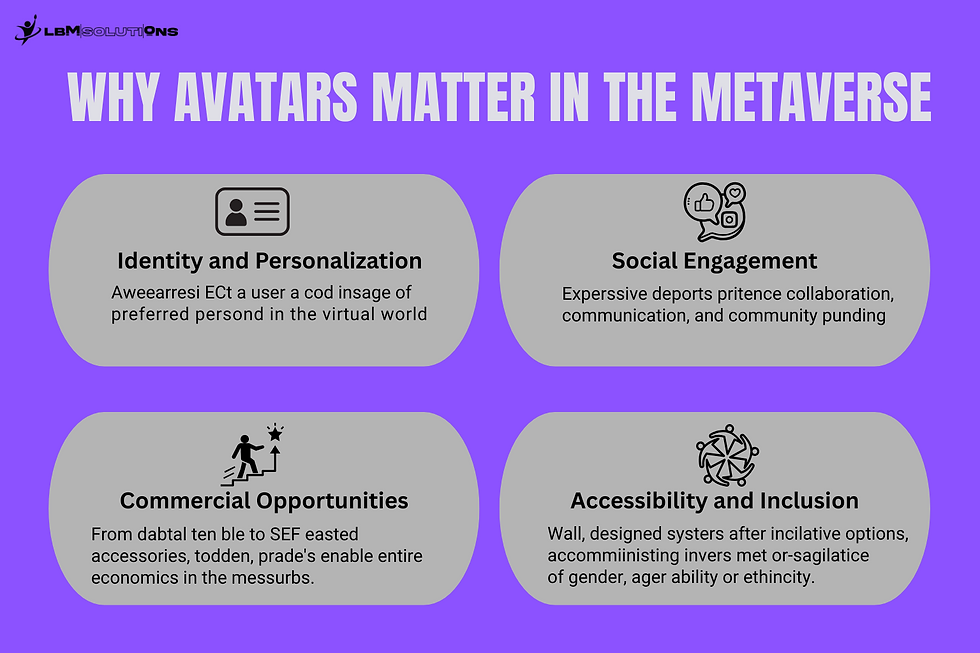
Identity and personalization: Avatars reflect a user’s self-image or preferred persona in the virtual world.
Social engagement: Expressive avatars enhance collaboration, communication, and community-building.
Commercial opportunities: From digital fashion to NFT-based accessories, custom avatars enable entire economies in the metaverse.
Accessibility and inclusion: Well-designed avatars offer inclusive options, accommodating diverse users regardless of gender, age, ability, or ethnicity.
Starting with the Basics: 3D Avatar Creation for Metaverse
At its core, avatar development involves building a 3D char
acter model that can be animated and integrated into virtual environments.
Here are the key components:
1. Modeling the Avatar
This is the initial phase where the character is sculpted using 3D modeling software such as Blender, Maya, or ZBrush. Depending on the level of realism or stylization, the poly count and topology may vary.
2. Texturing and Skinning
After modeling, the surface of the avatar is detailed with textures—skin tones, hair, clothing patterns, etc. Then, rigging or "skinning" adds a skeleton to the model, allowing it to move.
Skinning ensures that when a joint like an elbow bends, the mesh deforms naturally. Tools like Mixamo can auto-rig basic avatars and are useful for learning purposes.
3. Animation
Movement breathes life into avatars. This can be achieved through keyframe animation, motion capture, or real-time animation systems. Facial expressions, gestures, and walking cycles are part of this stage.
4. Integration with Platforms
Once created, avatars are exported into file formats compatible with metaverse platforms (like FBX, GLTF, or USDZ). Some platforms have proprietary formats or SDKs that developers must follow.
How to Design Metaverse Avatars that Stand Out
Designing a compelling avatar requires more than technical skill—it’s also about storytelling. Users should feel connected to their digital persona.
Here’s how to design avatars that make an impact:
Define the Use Case
Ask: is the avatar for a social VR platform, a corporate workspace, a gaming environment, or an NFT collection? The context determines not just aesthetics, but also functionality.
Think in Layers
Avatars are typically built in modular fashion—base body, clothes, accessories, animations. This allows for future customization without reworking the entire model.
Balance Realism and Performance
Hyper-realistic avatars may look stunning but can lag in real-time applications. Strike a balance by optimizing textures and using Level of Detail (LOD) techniques for smooth rendering.
Prioritize Accessibility
Offer a range of body types, skin tones, hairstyles, and gender expressions. Inclusivity strengthens user trust and promotes a broader user base.
Tools for Metaverse Avatar Development
Several powerful tools can assist in building and customizing avatars for different metaverse platforms. Whether you're a designer, developer, or hobbyist, here are popular choices for metaverse avatar development tools:
1. Ready Player Me
A user-friendly platform that allows quick creation of cross-platform avatars. Its SDK supports Unity and Unreal Engine, making it ideal for app integration.
2. Blender
The go-to tool for 3D modeling and animation, suitable for professionals and beginners alike. Rich with plugins and community resources.
3. Character Creator (by Reallusion)
Ideal for high-fidelity avatars used in cinematic environments or professional applications. It integrates well with iClone and Unreal Engine.
4. Zepeto Studio
Popular among fashion brands and creators, this tool allows the design of avatar apparel and accessories for monetization within the Zepeto metaverse.
5. Unity & Unreal Engine
If you're integrating avatars into interactive environments or games, game engines like Unity and Unreal are essential for deploying avatars with real-time responsiveness.
Custom Avatars in Metaverse: The Next Frontier
While preset avatars dominate early-stage platforms, there's a growing demand for custom avatars in metaverse ecosystems. This includes:
NFT Avatars: Unique, ownable avatars tied to blockchain tokens.
Wearable Assets: Digital clothing and gear that can be traded or unlocked.
AI-Enhanced Avatars: Characters that adapt and learn from user interaction.
These trends open up opportunities for brands, artists, and developers to co-create avatar ecosystems. For example, Adidas and Gucci have already launched branded avatar accessories in platforms like Roblox and The Sandbox.
For creators, understanding these trends offers an edge in designing metaverse-ready digital identities that go beyond aesthetics into utility and ownership.
Metaverse Character Design Tutorial: Where to Begin
If you're just starting out and looking for a metaverse character design tutorial, here's a simplified step-by-step workflow:
Sketch or concept your avatar: Start with a rough sketch or mood board.
Use Blender to model: Build the basic mesh using reference images.
Texture with Substance Painter or Blender: Add surface details like clothes and skin.
Rig with Mixamo: Upload your model and auto-rig for animation.
Animate using Unity or Unreal: Integrate expressions, gestures, and movement.
Test and optimize: Check poly count, textures, and responsiveness in virtual environments.
Export and deploy: Use platform-specific guidelines to integrate avatars into your chosen metaverse.
This pipeline helps you start from scratch and scale your skills over time, eventually allowing for full avatar systems with customization layers, user-controlled animations, and monetization.
Final Thoughts
Metaverse avatar development is more than a technical exercise—it's an exploration of identity, creativity, and human interaction in a digital age. As virtual worlds become more mainstream, the demand for authentic, diverse, and functional avatars will only grow.
Whether you’re learning how to design metaverse avatars for fun or building a product around them, now is the perfect time to get involved.
At LBM Solution, we help businesses and creators navigate this space with custom avatar development services, integration strategies, and interactive experiences tailored for the evolving metaverse.


Comments